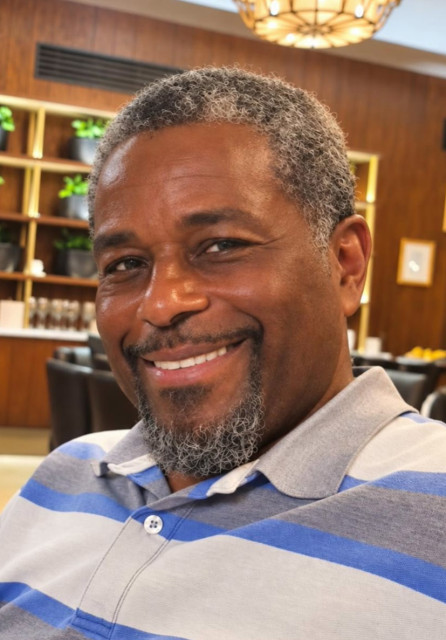
Earl James
February 17, 1952 ~
October 17, 2026
A Life of Faith, Love, Justice, and Legacy
Some lives are measured by the years they encompass. Others are measured by the lives they touch, the barriers they challenge, the communities they strengthen, and the love they leave behind. By every measure that matters most, Earl James lived a remarkable life.
On October 17, 2026, Earl James passed away at the age of 74, leaving behind an extraordinary legacy of faith, love, leadership, service, and an unwavering commitment to justice, compassion, and the inherent worth of every human being.
A devoted husband, father, grandfather, author, educator, mentor, community leader, and tireless advocate for racial and social justice, Earl dedicated his life to building bridges between people, strengthening communities, and encouraging others to recognize the inherent worth and humanity of those around them.
His influence reached across congregations, denominations, neighborhoods, institutions, and national borders. Yet those who knew Earl often remember something more personal than any title he held: his remarkable ability to make people feel seen, heard, respected, encouraged, and genuinely valued.
Early Life, Education, and the Foundations of Service
Earl James was born on February 17, 1952, in Tarrytown, New York, to Earl Gilbert James, Sr. and Theda Bara Lee James, both of whom preceded him in death.
He graduated from Sleepy Hollow High School in 1970 and continued his education at Anderson University in Indiana, where he earned a bachelor's degree in Criminal Justice in 1976.
Following graduation, Earl embarked on a distinguished career in criminal justice, serving in positions of increasing responsibility, including Probation Agent, Parole Officer, and Assistant Deputy Warden. Over the course of eighteen years with the Michigan Department of Corrections, he worked in correctional institutions across several Michigan communities, gaining extensive experience in institutional leadership and the complexities of the criminal justice system.
His work placed him in environments that demanded sound judgment, resilience, compassion, and a deep understanding of human behavior and institutional systems. After eighteen years of service, Earl made the decision to resign from the Michigan Department of Corrections and embark on a new chapter of professional leadership, one that would allow him to devote his gifts, experience, and passion for service to faith-based ministry and community development.
He began this next chapter in executive leadership within the Christian Reformed Church in North America (CRCNA), initially serving at Madison Square Christian Reformed Church in Grand Rapids, Michigan. His work would expand to encompass a variety of ministries, community initiatives, leadership roles, and partnerships within the denomination and beyond.
This transition marked the beginning of an expansive career in ministry, community advocacy, racial reconciliation, and social justice that would ultimately extend far beyond Michigan, reaching communities throughout the United States and internationally.
A Calling to Ministry and Community Transformation
Earl believed that faith was not simply something to profess, but something to practice. He understood that churches were called not only to nurture the spiritual lives of their congregations, but also to become active partners in strengthening the communities surrounding them.
Throughout his leadership within the Christian Reformed denomination, Earl worked to develop ministries, cultivate partnerships, strengthen community relationships, and encourage churches to become more deeply engaged in the needs and aspirations of the people they served.
His work reflected a conviction that meaningful ministry extends beyond the walls of a church and requires genuine collaboration, thoughtful leadership, and a sustained commitment to the well-being of individuals and communities.
Earl served for approximately four years as Executive Director of Vinedresser Ministries, an initiative focused on reaching young people and strengthening communities. During this period, he also served in executive leadership at Madison Square Christian Reformed Church in Grand Rapids, Michigan.
In these roles, Earl demonstrated a remarkable ability to connect people, cultivate partnerships, and encourage leaders to recognize the possibilities that emerge when communities work together toward a shared purpose.
His ministry and community development efforts included relationships with leaders connected to the DeVos Urban Leadership Initiative and consulting work with the Christian Reformed World Relief Committee, now known as World Renew, on urban renewal and community engagement.
Earl also helped establish the Black and Reformed Leadership Network, contributing to efforts to strengthen churches, develop leaders, and deepen relationships between congregations and the neighborhoods they served.
Throughout these endeavors, Earl championed the belief that meaningful transformation requires more than programs or institutional commitments. It requires authentic relationships, courageous conversations, mutual respect, and a willingness to recognize and confront the barriers that prevent individuals and communities from flourishing.
For Earl, racial reconciliation and social justice were never merely professional responsibilities or abstract ideals. They were deeply held convictions that shaped his leadership, relationships, ministry, and understanding of what it meant to live faithfully.
Thirteen Years of Leadership in the Reformed Church in America
In 2007, Earl joined the General Synod Council staff of the Reformed Church in America (RCA), beginning thirteen years of distinguished service that continued until his retirement from his staff position in 2020.
His most recent leadership positions included Executive Coordinator of Multiracial Initiatives & Social Justice and Coordinator of African American/Black Ministries & Advocacy.
Through these roles, Earl devoted himself to advancing racial justice, fostering meaningful relationships across racial and cultural divides, advocating for historically marginalized communities, and strengthening the church's commitment to multicultural ministry, inclusion, and equitable participation.
His work involved bringing together church leaders, congregations, and communities to engage in difficult but necessary conversations about race, justice, cultural understanding, and the responsibilities of faith communities in addressing inequity.
Earl believed that authentic reconciliation required more than good intentions. It demanded honesty, accountability, humility, and a willingness to move beyond conversation toward meaningful action.
He encouraged churches and institutions to examine their practices, challenge longstanding barriers, and cultivate environments in which people from diverse backgrounds could experience genuine belonging and opportunities for leadership.
Although Earl formally retired from his RCA staff position in 2020, his commitment to the denomination and its mission remained unwavering.
He continued serving in important leadership and advocacy capacities, including as Secretary of the Commission on Race and Ethnicity, a position he held at the time of his passing.
His continued involvement reflected a fundamental truth about Earl's life: his commitment to justice, reconciliation, and service was never simply a career. It was a calling that remained central to who he was.
International Ministry and Global Partnerships
Earl's commitment to faith, justice, community development, and human dignity extended well beyond the borders of the United States.
Through international ministry collaborations and partnerships, he worked alongside faith leaders and organizations in Liberia and the Philippines, building relationships across cultures and contributing to efforts rooted in ministry, leadership, service, and community engagement.
His international involvement reflected his conviction that the values of compassion, justice, and human dignity transcend geographical, cultural, and denominational boundaries.
Whether serving communities close to home or collaborating with leaders across the world, Earl remained committed to fostering meaningful connections, strengthening relationships, and encouraging others to recognize their shared humanity.
His life's work reflected a consistent belief that communities and institutions become stronger when people are willing to listen to one another, learn from different experiences, and work collaboratively toward a more just and compassionate world.
The breadth of Earl's service was extraordinary. His involvement encompassed so many organizations, ministries, community initiatives, partnerships, and efforts to advance justice and human dignity that no single obituary could fully account for them all.
His family extends sincere apologies to any individuals, organizations, or initiatives unintentionally omitted from this tribute. Every shared endeavor, relationship, and contribution remains part of the larger story of his life's work and enduring legacy.
An Author, Reflective Thinker, and Lifelong Student of the Human Experience
Earl was also a gifted writer, author, and reflective thinker who believed deeply in the power of storytelling to illuminate the human experience, preserve meaningful memories, and express the complexities of the human heart.
In his memoir, Harvestings: Finding the Forces That Shaped My Life, Earl invited readers into the formative chapters of his personal journey, exploring the experiences, relationships, challenges, and discoveries that shaped the man he would become.
Rather than focusing on his later accomplishments in ministry, leadership, and social justice advocacy, he deliberately turned his attention to the first thirty-five years of his life.
Through reflections on family, faith and doubt, influential teachers and mentors, depression, and life's inevitable hardships, he examined how his values, beliefs, and perspectives gradually took root and became the foundation for everything that followed.
His second published work, Songs to My Jazzy One: A Tribute to My Wife — Told in Bouquets, Letters, & Reflections, offered an intimate and deeply personal celebration of his love for his wife, Norma Coleman-James.
Written after twenty years of marriage, this memoir-anthology brought together love letters, messages accompanying bouquets of flowers, wedding vows, and heartfelt reflections accumulated throughout their years together.
Through these writings, Earl revealed the tenderness, devotion, and intentionality with which he approached marriage. His words reflected a man who never took love for granted and who continued, even after two decades, to seek new and meaningful ways to express his affection and appreciation for the woman he loved.
Together, these two books offer a remarkable window into Earl's inner world. One explores the experiences that shaped his identity and life's purpose; the other celebrates the enduring love that enriched his personal life.
Both reflect his extraordinary capacity for introspection, vulnerability, gratitude, and meaningful human connection.
Through his writing, Earl leaves behind not only the story of his own journey, but also an invitation for others to reflect upon the relationships, experiences, and expressions of love that give their own lives meaning.
The Man Behind the Accomplishments
For all his professional achievements and the countless lives he touched, Earl was never defined by his titles alone.
Earl possessed a remarkable combination of strength and warmth. He carried himself with confidence and conviction, yet those who knew him experienced a man whose graciousness, radiant smile, and genuine interest in and compassion for others made meaningful connection seem effortless.
His longtime friend and fellow ministry leader Reginald Smith also remembered the privilege of officiating Earl's marriage to Norma and witnessing the heartfelt expression of love reflected in the vows Earl had written for their wedding.
It was one of countless reminders that the same man who devoted himself to public service possessed an extraordinary capacity for tenderness, affection, and meaningful personal connection.
Earl was a man who believed that people mattered. He understood that meaningful relationships required more than polite exchanges or superficial gestures. They required genuine listening, mutual respect, compassion, and the willingness to recognize the humanity of others.
To colleagues, he was a trusted collaborator, mentor, and thoughtful leader.
To friends, he was a source of wisdom, laughter, encouragement, and steadfast affection.
To those who encountered him through his ministry and advocacy, he offered something increasingly rare: the experience of being genuinely heard, respected, and valued.
His life demonstrated that strength and gentleness, conviction and humility, and leadership and compassion are not opposing qualities, but can exist beautifully within the same person.
Above All, Family
For all of Earl's extraordinary professional accomplishments, his extensive ministry, and the countless lives he touched throughout the world, his greatest joy, deepest love, and most treasured calling were found within his family.
Earl shared his life with his beloved wife, Norma Coleman-James. An important chapter of his life was his twenty-five-year marriage to Mary Esther, the mother of his two daughters, with whom he maintained a cherished friendship.
He was the deeply devoted father of his two daughters, Melissa-Lee LuAnn and Stephanie ErinMaria, and the immensely proud and loving grandfather of Jada Erin, Sophia Noelle, and Isaiah James.
To his daughters and grandchildren, Earl was far more than a father and grandfather. He was their confidant, their greatest encourager, their unwavering source of love and support, and a best friend to each of them. He was intimately involved in their lives, celebrating their accomplishments, guiding them through challenges, sharing in their joys, and providing a depth of love, wisdom, and presence that was extraordinary and irreplaceable.
Among the many lessons Earl instilled in his family, one simple but profoundly meaningful expression became a cherished family tradition: "For the family."
Whenever one of his daughters or grandchildren achieved something meaningful, reached an important milestone, or made him especially proud, Earl would lovingly remind them, "You did it for the family," or simply, "For the family."
Those three words became far more than a familiar saying. They embodied his deeply held belief that family was a source of shared strength, pride, belonging, and purpose. What began as an expression he lovingly instilled in his daughters became a treasured part of the lives of his grandchildren, carrying his values and his voice from one generation to the next.
To Melissa-Lee LuAnn, Stephanie Erin-Maria, Jada Erin, Sophia Noelle, and Isaiah James, those words will forever be unmistakably his. They represent not only the pride he took in each of them individually, but the extraordinary love that bound them together as a family.
Earl was preceded in death by his parents, Earl Gilbert James, Sr. and Theda Bara Lee James. He is also survived by his three siblings, Jonathan Lee, Darian Lloyd, and Sharon LuAnn Elizabeth.
Although his absence leaves a void beyond words, the love he poured into his family remains an enduring part of who they are. His wisdom will continue to guide them, his encouragement will continue to inspire them, and the values he so intentionally nurtured will live on through the generations that follow.
And whenever his family celebrates another accomplishment, reaches another milestone, or finds strength in one another, three familiar words will continue to carry the love and unmistakable voice of the man who taught them what it meant to belong to something greater than themselves.
For the family.
A Legacy That Lives On
Earl James's life was a testament to the extraordinary power of faith expressed through action, love demonstrated through presence, and leadership grounded in service to others.
He believed that the measure of a meaningful life was not found simply in professional accomplishments, recognition, or positions of influence, but in the relationships cultivated, the people encouraged, the barriers challenged, and the opportunities created for others.
His life reminds us that meaningful change begins when people are willing to recognize the dignity of others, confront injustice with courage, and build relationships rooted in compassion, respect, and shared humanity.
His passing leaves an immeasurable absence in the lives of his family, friends, colleagues, and the countless communities he served.
Yet the principles by which he lived do not end with his death. They endure in the leaders he mentored, the communities he strengthened, the conversations he inspired, the relationships he nurtured, and the people whose lives were forever changed because they had the privilege of knowing him.
They endure in the written reflections he leaves behind, in the work of justice and reconciliation that continues, and most intimately, in the hearts and lives of the family he loved beyond measure.
Earl's legacy is not confined to the years between his birth and passing. It lives on wherever people choose compassion over indifference, understanding over division, and meaningful action over complacency.
And for those who knew and loved him most, his memory will forever be accompanied by the unmistakable warmth of his smile, the wisdom of his words, the strength of his convictions, and the extraordinary love with which he lived.
A life beautifully lived. A legacy profoundly felt. A love that will endure for generations.